- ARTSHOP
- Anthropogenic
Anthropogenic
Anthropogenic
Mixed media 36 x 48
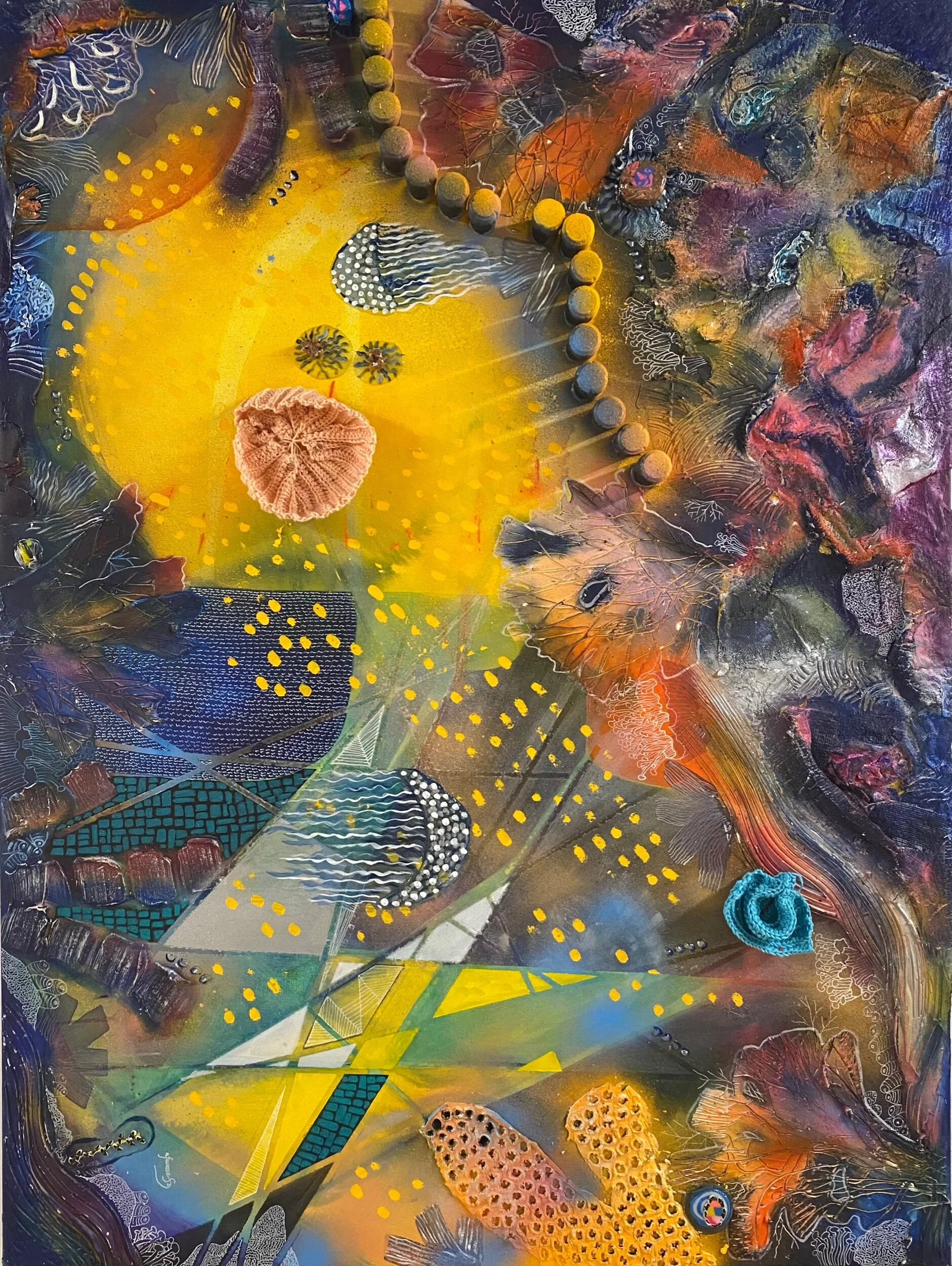
Acrylic, spray paint, paint markers, pens, spackle, casting material, thread, metal studs, resin, clay, cork, hot glue
This work is my reflection on the materials that once shaped human survival. There was a time when broken bones were mended with sticks, leaves, and clay; when our homes were built from branches, dried leaves, mud, and earth; when clothing came from hide, wool, and natural dyes. We lived in direct relationship with the planet’s cycles — including decomposition, the slow and essential process through which the earth repairs itself.
In this painting, I revisit those origins through an anthropogenic lens. The materials I use echo the substances that now mend our bones, seal our walls, and stitch our clothes — yet each one contains toxic chemicals that interrupt the planet’s ability to heal. These materials made modern civilization possible, but they also severed us from the ecological wisdom embedded in our earliest ways of living.
This piece is a meditation on how far we have drifted from the natural processes that once sustained us. It is a reminder that climate disruption is anthropogenic — born from our inventions, our extractions, and our refusal to let the earth decompose, regenerate, and mend itself.
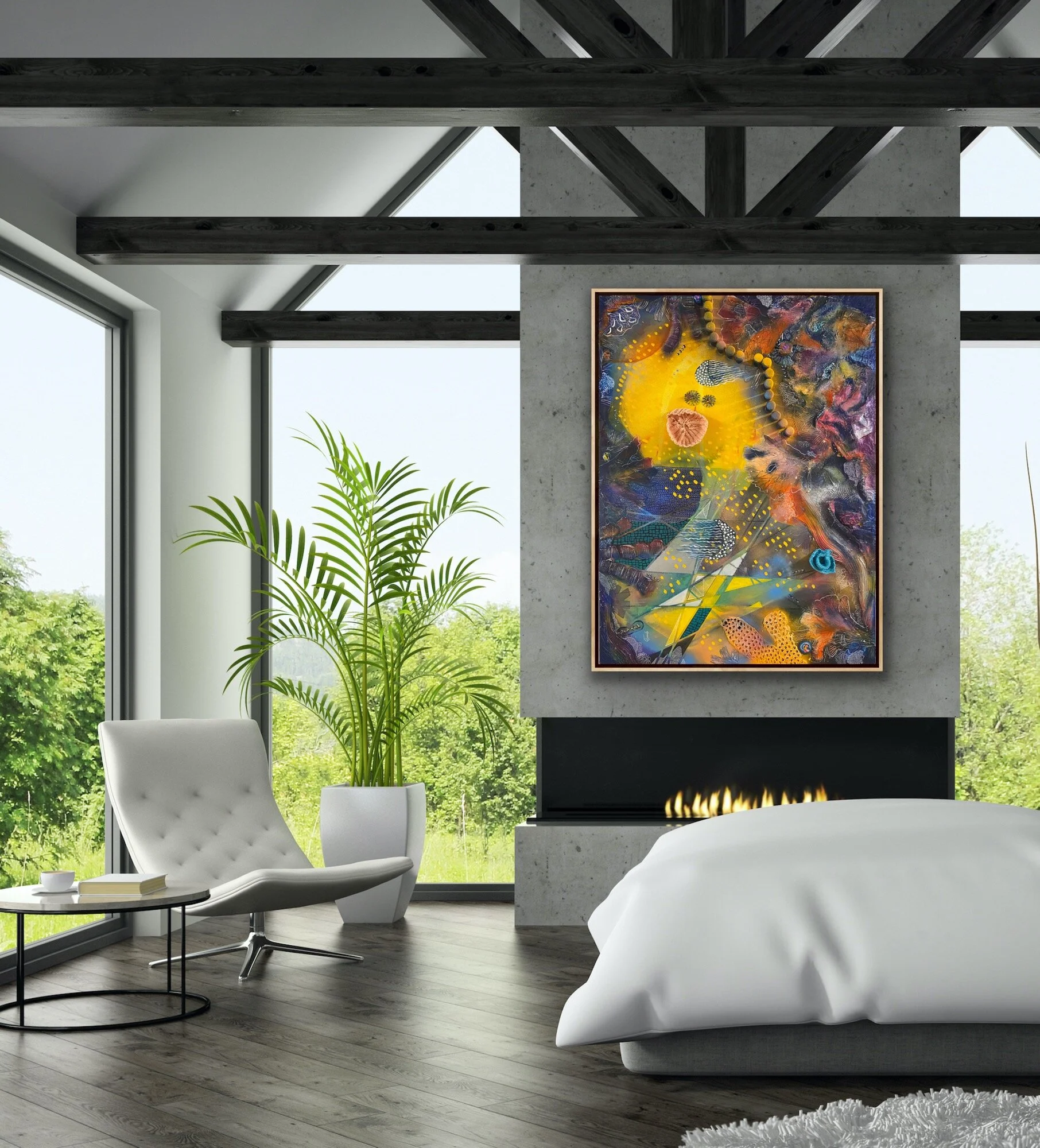
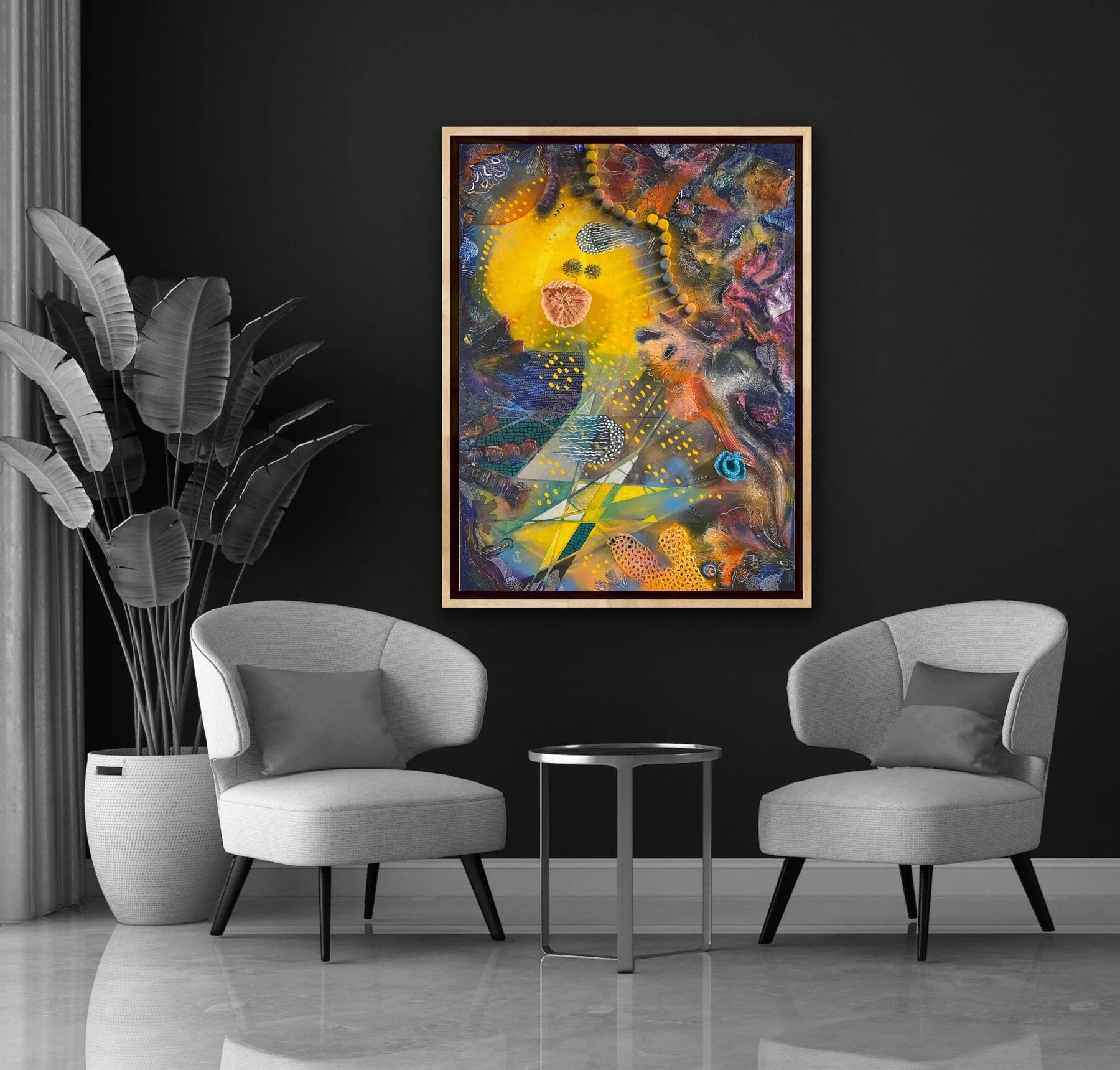
In Anthropogenic, Andrea Facusse constructs a vibrant, living landscape shaped by human influence. A radiant yellow core anchors the composition, pulsing outward like a sun, a nucleus, or an ignition point. Around it, organic forms resembling coral, spores, tendrils, and drifting organisms emerge in layered blues, purples, oranges, and greens, creating an ecosystem that feels both wondrous and fragile.
Facusse’s textured surfaces and intricate patterns evoke environments altered by human presence—reefs under stress, habitats in flux, worlds adapting to forces beyond their control. The painting’s swirling geometry and luminous color fields suggest movement, growth, and disturbance, capturing the tension between natural resilience and anthropogenic change.
Anthropogenic reflects Facusse’s ongoing exploration of how human activity shapes the living world. The work does not depict destruction outright; instead, it reveals a moment of transformation—an ecosystem responding, evolving, and resisting. The painting invites viewers to consider the beauty that persists within altered environments, and the responsibility carried by those who influence them.
Mixed media 36 x 48
Acrylic, spray paint, paint markers, pens, spackle, casting material, thread, metal studs, resin, clay, cork, hot glue
This work is my reflection on the materials that once shaped human survival. There was a time when broken bones were mended with sticks, leaves, and clay; when our homes were built from branches, dried leaves, mud, and earth; when clothing came from hide, wool, and natural dyes. We lived in direct relationship with the planet’s cycles — including decomposition, the slow and essential process through which the earth repairs itself.
In this painting, I revisit those origins through an anthropogenic lens. The materials I use echo the substances that now mend our bones, seal our walls, and stitch our clothes — yet each one contains toxic chemicals that interrupt the planet’s ability to heal. These materials made modern civilization possible, but they also severed us from the ecological wisdom embedded in our earliest ways of living.
This piece is a meditation on how far we have drifted from the natural processes that once sustained us. It is a reminder that climate disruption is anthropogenic — born from our inventions, our extractions, and our refusal to let the earth decompose, regenerate, and mend itself.
In Anthropogenic, Andrea Facusse constructs a vibrant, living landscape shaped by human influence. A radiant yellow core anchors the composition, pulsing outward like a sun, a nucleus, or an ignition point. Around it, organic forms resembling coral, spores, tendrils, and drifting organisms emerge in layered blues, purples, oranges, and greens, creating an ecosystem that feels both wondrous and fragile.
Facusse’s textured surfaces and intricate patterns evoke environments altered by human presence—reefs under stress, habitats in flux, worlds adapting to forces beyond their control. The painting’s swirling geometry and luminous color fields suggest movement, growth, and disturbance, capturing the tension between natural resilience and anthropogenic change.
Anthropogenic reflects Facusse’s ongoing exploration of how human activity shapes the living world. The work does not depict destruction outright; instead, it reveals a moment of transformation—an ecosystem responding, evolving, and resisting. The painting invites viewers to consider the beauty that persists within altered environments, and the responsibility carried by those who influence them.